Sitemap
A list of all the posts and pages found on the site. For you robots out there, there is an XML version available for digesting as well.
Pages
Posts
Future Blog Post
Published:
This post will show up by default. To disable scheduling of future posts, edit config.yml and set future: false.
Blog Post number 4
Published:
This is a sample blog post. Lorem ipsum I can’t remember the rest of lorem ipsum and don’t have an internet connection right now. Testing testing testing this blog post. Blog posts are cool.
Blog Post number 3
Published:
This is a sample blog post. Lorem ipsum I can’t remember the rest of lorem ipsum and don’t have an internet connection right now. Testing testing testing this blog post. Blog posts are cool.
Blog Post number 2
Published:
This is a sample blog post. Lorem ipsum I can’t remember the rest of lorem ipsum and don’t have an internet connection right now. Testing testing testing this blog post. Blog posts are cool.
Blog Post number 1
Published:
This is a sample blog post. Lorem ipsum I can’t remember the rest of lorem ipsum and don’t have an internet connection right now. Testing testing testing this blog post. Blog posts are cool.
portfolio
[10/06/2023] Poster presentation at the MidAtlantic Bioinformatics Conference, 2023
Location: Children’s Hospital of Philadelphia, Philadelphia, PA 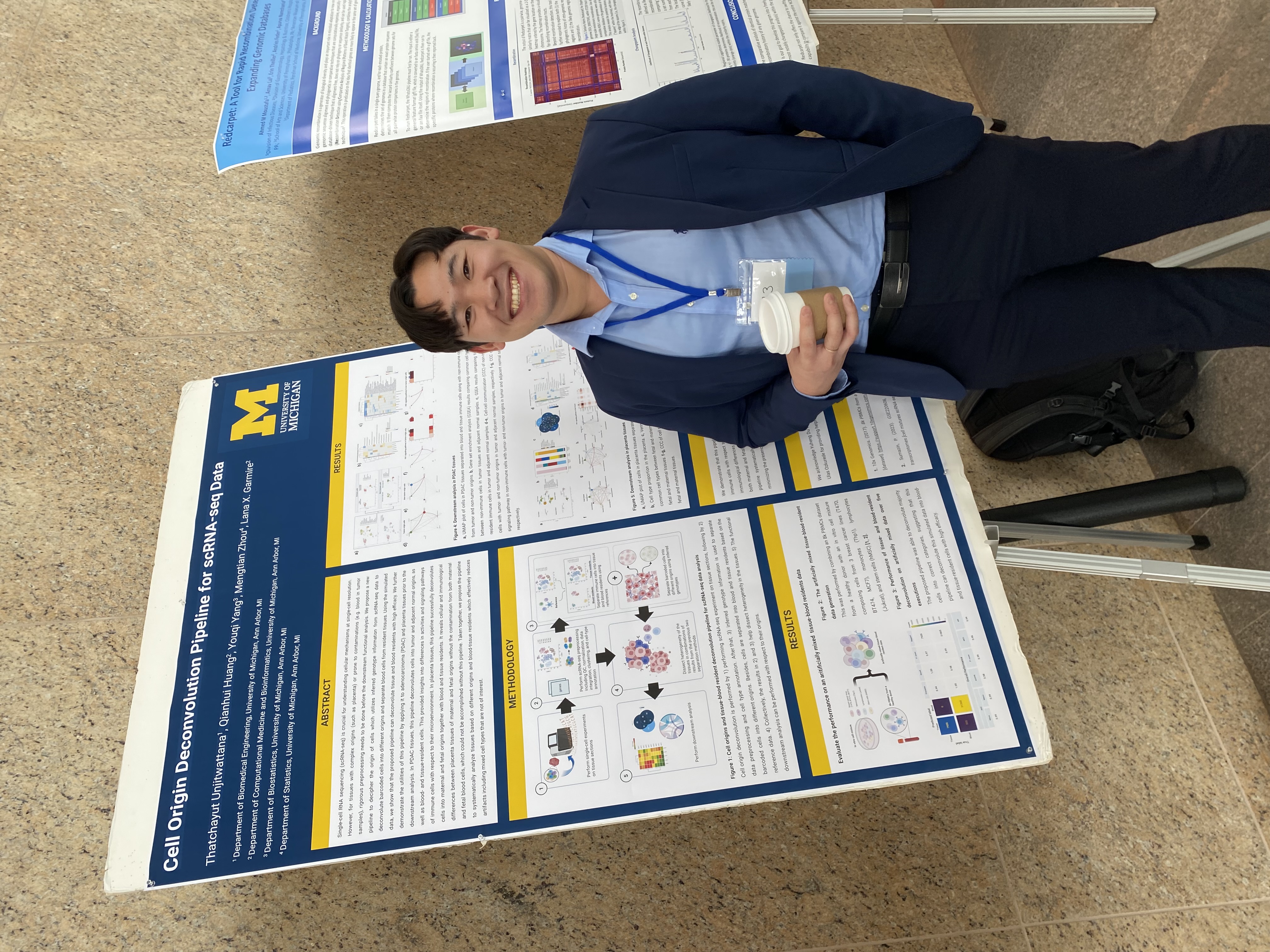
[05/17/2024] Poster presentation at DahShu 2024 Data Science Symposium
Location: Michigan State University, East Lansing, MI 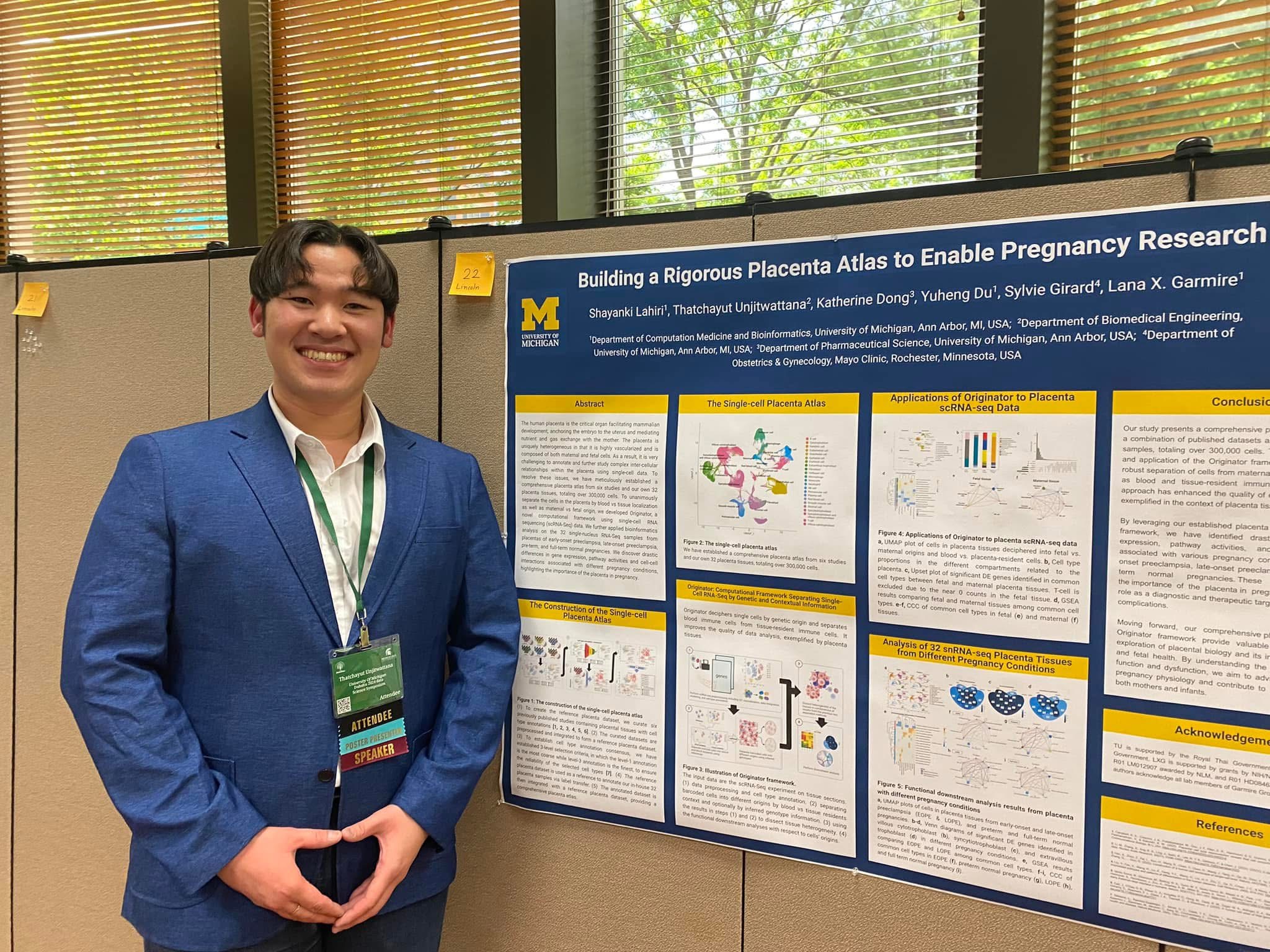
[05/18/2024] I was invited to give a selected talk at DahShu 2024 Data Science Symposium
Location: Michigan State University, East Lansing, MI 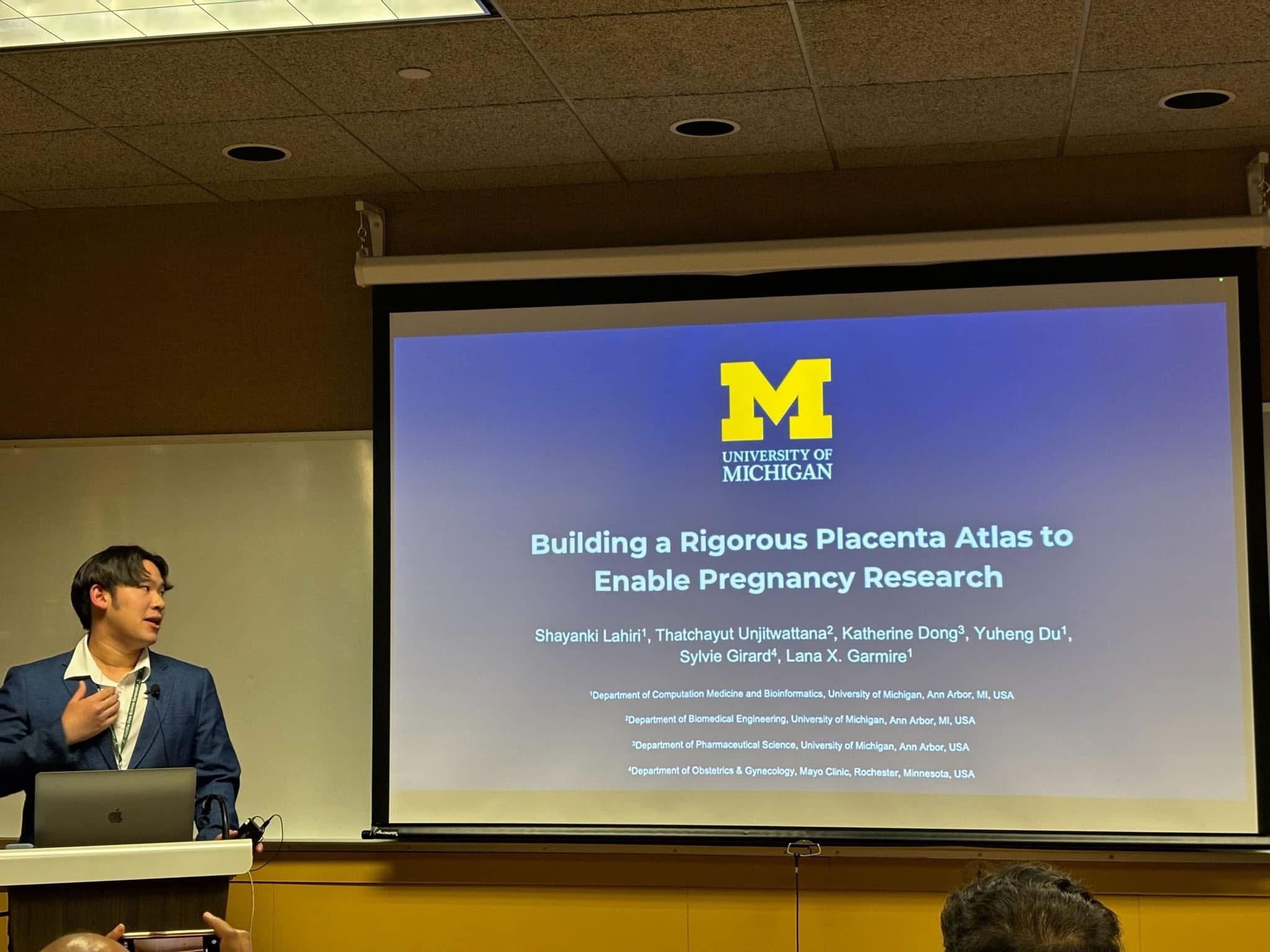
publications
Single-cell RNA-seq data have prevalent blood contamination but can be rescued by Originator, a computational tool separating single-cell RNA-seq by genetic and contextual information
Published in Genome Biology, 2025
Single-cell RNA sequencing (scRNA-seq) data from complex human tissues have prevalent blood cell contamination during the sample preparation process. They may also comprise cells of different genetic makeups. We propose a new computational framework, Originator, which deciphers single cells by genetic origin and separates immune cells of blood contamination from those of expected tissue-resident cells. We demonstrate the accuracy of Originator at separating immune cells from the blood and tissue as well as cells of different genetic origins, using a variety of artificially mixed and real datasets, including pancreatic cancer and placentas as examples.
[Preprint] Linking Spatial Omics to Patient Phenotypes at Population Scale Using BSNMani
Published in medRxiv, 2025
Spatial omics enables the integration of gene expression with clinical outcome, yet incorporating spatial single-cell data into predictive statistical models at the population scale remains a significant challenge. Here, we adapt BSNMani, a Bayesian scalar-on-network regression model with manifold learning, to incorporate spatial co-expression networks for disease outcome modeling. Using the Seattle Alzheimer’s Disease Brain Cell Atlas (SEA-AD) MERFISH dataset (n=26), we found that Smoothie is a desired method for constructing spatially informed sample-specific co-expression matrices within the BSNMani framework, among the four benchmarked methods, including WGCNA, Smoothie, SpaceX, and hdWGCNA. BSNMani reached an accuracy of AUC = 0.76 for Alzheimer’s Disease (AD) prediction, while revealing 4 distinct gene-gene co-expression subnetworks among the patients. We also applied the Smoothie + BSNMani workframe to predict the patient survival from a breast cancer spatial proteomics dataset obtained with Imaging Mass Cytometry (IMC) technology. The workframe showed robust predictive accuracy for patient survival and revealed biologically meaningful subnetworks associated with tumor progression, immune regulation, hormone signaling, and metabolic reprogramming. BSNMani is a powerful tool that integrates high-dimensional spatial omics data for clinical outcome prediction across diverse disease settings, while revealing deep biological insights and easy interpretation.
talks
Talk 1 on Relevant Topic in Your Field
Published:
This is a description of your talk, which is a markdown file that can be all markdown-ified like any other post. Yay markdown!
Conference Proceeding talk 3 on Relevant Topic in Your Field
Published:
This is a description of your conference proceedings talk, note the different field in type. You can put anything in this field.
teaching
Teaching experience 1
Undergraduate course, University 1, Department, 2014
This is a description of a teaching experience. You can use markdown like any other post.
Teaching experience 2
Workshop, University 1, Department, 2015
This is a description of a teaching experience. You can use markdown like any other post.