Location: Children’s Hospital of Philadelphia, Philadelphia, PA 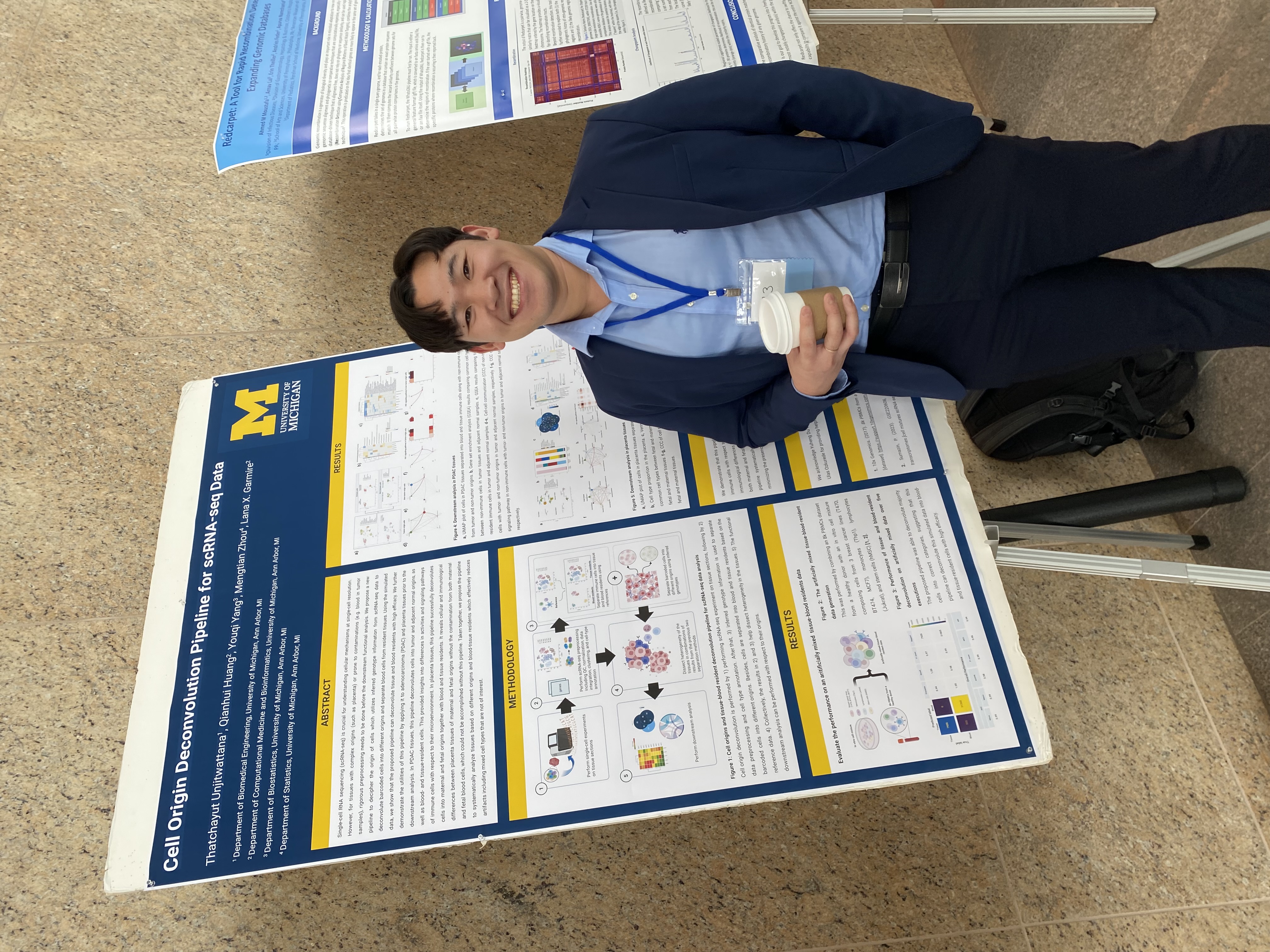
Posts by Collection
portfolio
Location: Michigan State University, East Lansing, MI 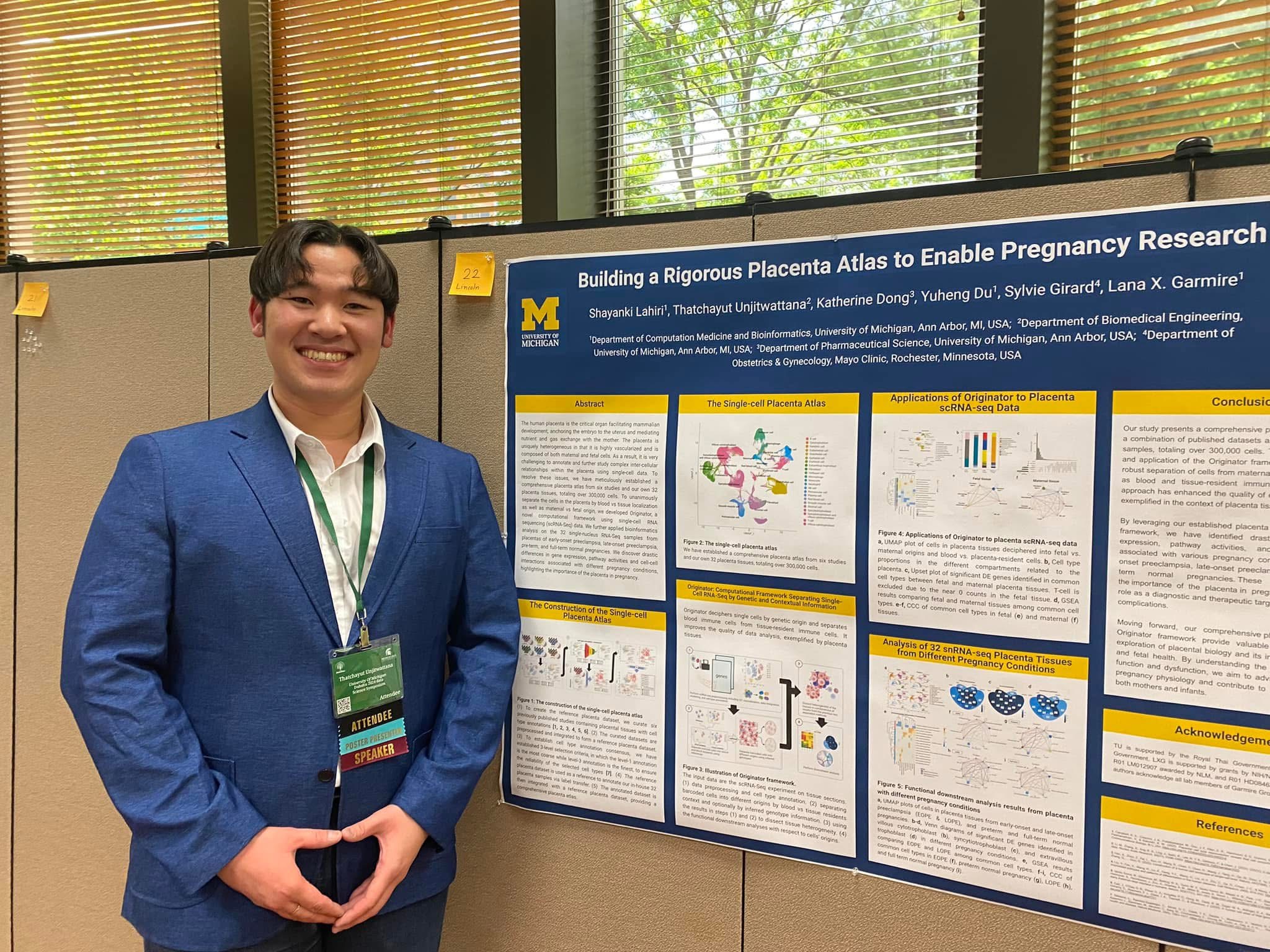
Location: Michigan State University, East Lansing, MI 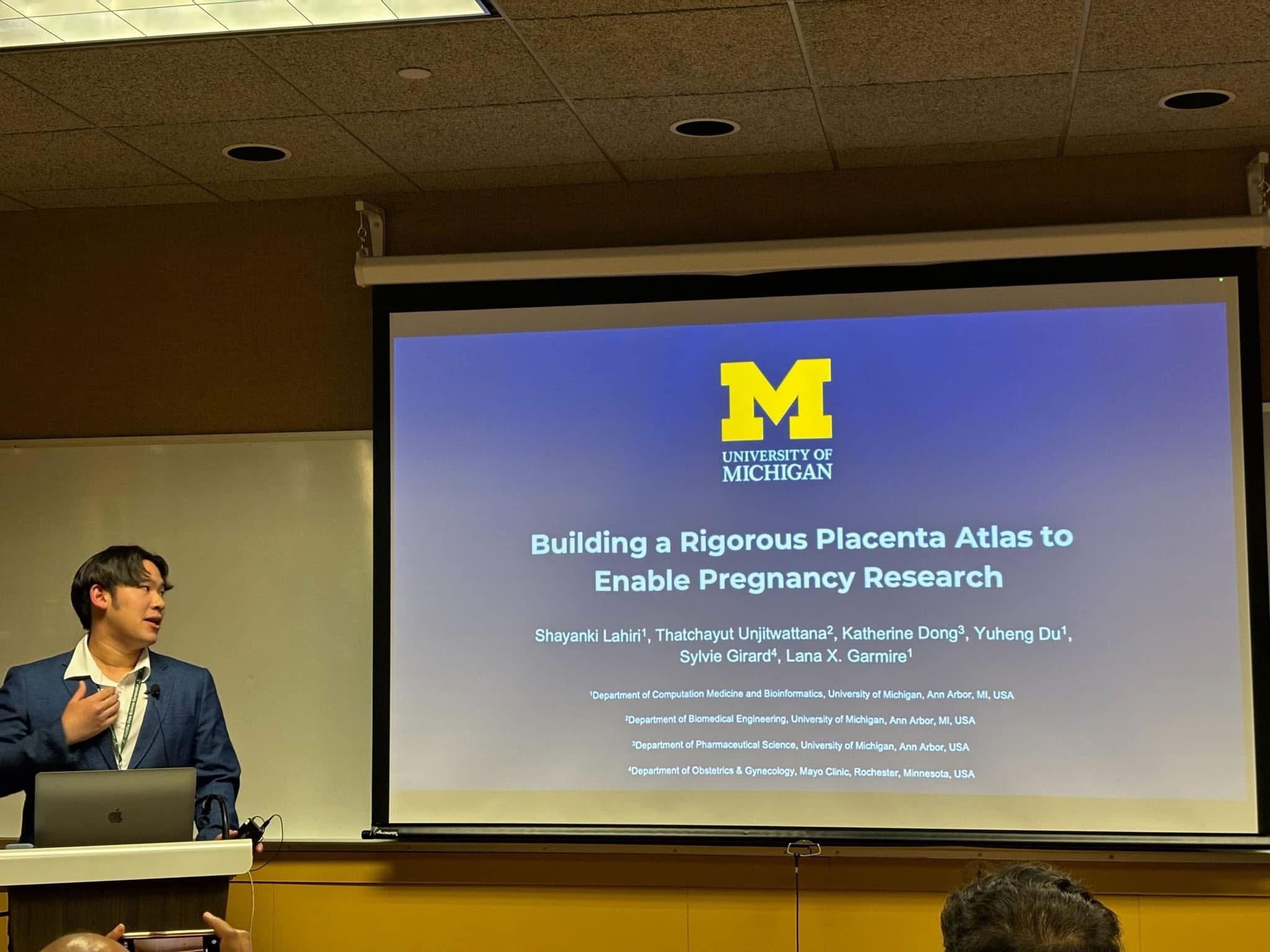
publications
Published in Genome Biology, 2025
Single-cell RNA sequencing (scRNA-seq) data from complex human tissues have prevalent blood cell contamination during the sample preparation process. They may also comprise cells of different genetic makeups. We propose a new computational framework, Originator, which deciphers single cells by genetic origin and separates immune cells of blood contamination from those of expected tissue-resident cells. We demonstrate the accuracy of Originator at separating immune cells from the blood and tissue as well as cells of different genetic origins, using a variety of artificially mixed and real datasets, including pancreatic cancer and placentas as examples.
Published in medRxiv, 2025
Spatial omics enables the integration of gene expression with clinical outcome, yet incorporating spatial single-cell data into predictive statistical models at the population scale remains a significant challenge. Here, we adapt BSNMani, a Bayesian scalar-on-network regression model with manifold learning, to incorporate spatial co-expression networks for disease outcome modeling. Using the Seattle Alzheimer’s Disease Brain Cell Atlas (SEA-AD) MERFISH dataset (n=26), we found that Smoothie is a desired method for constructing spatially informed sample-specific co-expression matrices within the BSNMani framework, among the four benchmarked methods, including WGCNA, Smoothie, SpaceX, and hdWGCNA. BSNMani reached an accuracy of AUC = 0.76 for Alzheimer’s Disease (AD) prediction, while revealing 4 distinct gene-gene co-expression subnetworks among the patients. We also applied the Smoothie + BSNMani workframe to predict the patient survival from a breast cancer spatial proteomics dataset obtained with Imaging Mass Cytometry (IMC) technology. The workframe showed robust predictive accuracy for patient survival and revealed biologically meaningful subnetworks associated with tumor progression, immune regulation, hormone signaling, and metabolic reprogramming. BSNMani is a powerful tool that integrates high-dimensional spatial omics data for clinical outcome prediction across diverse disease settings, while revealing deep biological insights and easy interpretation.
Published in bioRxiv, 2026
Drug repurposing offers a scalable route to accelerate therapeutic discovery, yet existing approaches based on single-cell RNA sequencing (scRNA-seq) often overlook spatial tissue context, limiting their ability to capture microenvironment-dependent drug responses. Here we present STDrug, a spatially informed computational framework that integrates spatial transcriptomics, graph-based modeling, and multimodal learning to enable patient-specific therapeutic prioritization. STDrug identifies and aligns disease and control spatial domains using graph convolutional networks and coherent point drift, and prioritizes candidate drugs through an integrative scoring scheme combining tumor-reversible gene signatures, perturbation-based reversal scores, and knowledge-guided gene weighting within a machine learning framework. By modeling spatial domain interactions alongside predicted drug efficacy and toxicity, STDrug generates robust patient-level drug scores. Across hepatocellular carcinoma and prostate cancer datasets, STDrug outperforms existing single-cell and spatial transcriptomics-based drug repurposing methods, achieving signficantly improved predictive accuracy (AUCs=0.81-0.82) across patients. Validation using large-scale electronic health records and in vitro assays further supports the translational relevance of top-ranked candidates. Taking together, STDrug establishes a generalizable framework for incorporating spatial omics into therapeutic discovery, advancing spatially informed and personalized drug repurposing.
Published in Nature Biomedical Engineering, 2026
Copy number variations (CNV) are key drivers of cancer progression, yet methods for predicting spatial CNVs directly from haematoxylin and eosin (H&E) images are currently lacking. We introduce HisToSpatialCNV, a multiscale deep-learning framework that integrates histopathological features from H&E-stained images to infer spatial CNV patterns. Combining interpretable feature extraction with graph neural networks and multihead self-attention, our approach captures both local and global tissue contexts. Applied to HER2+ breast cancer, skin cancer and brain cancer datasets, HisToSpatialCNV outperformed existing methods for spatial gene expression inference and showed strong concordance between predicted CNVs and gene expression. In addition, it enabled tumour subclone identification, phylogenetic reconstruction and detection of pathway alterations linked to tumour progression. HisToSpatialCNV generalized across Visium and Xenium spatial transcriptomics platforms, on HER2+ patients. Applying the HisToSpatialCNV HER2+ model to TCGA HER2+ histopathology data identified spatial-molecular subtypes associated with distinct survival outcomes in TCGA HER2+ patients. By connecting histopathology to spatial genomics, HisToSpatialCNV offers a powerful, cost-effective tool for studying intratumour heterogeneity using only routine pathology images.
talks
Published:
This is a description of your talk, which is a markdown file that can be all markdown-ified like any other post. Yay markdown!
Published:
This is a description of your tutorial, note the different field in type. This is a markdown files that can be all markdown-ified like any other post. Yay markdown!
Published:
This is a description of your talk, which is a markdown files that can be all markdown-ified like any other post. Yay markdown!
Published:
This is a description of your conference proceedings talk, note the different field in type. You can put anything in this field.
teaching
Undergraduate course, University 1, Department, 2014
This is a description of a teaching experience. You can use markdown like any other post.
Heading 1
Heading 2
Heading 3
Workshop, University 1, Department, 2015
This is a description of a teaching experience. You can use markdown like any other post.